

Katrin Deren
International Business Development
Published on 31. Mar 2026
At the historic Alatskivi Castle, a day dedicated to language, entrepreneurship, and future opportunities brought together students, educators, and international partners. As a partner of the German Baltic Future Foundation (DBJW), Nordic Render was a proud supporter and sponsor of the initiative — contributing both through active participation and by supporting the event, including prizes for the student quiz.
For Nordic Render, participation in the Alatskivi German Language and Entrepreneurship Inspiration Day was more than just presence — it was a meaningful opportunity to invest in youth, education, and the future of a region where opportunities are often less visible but no less important.
Empowering Youth Through Real-World Insight
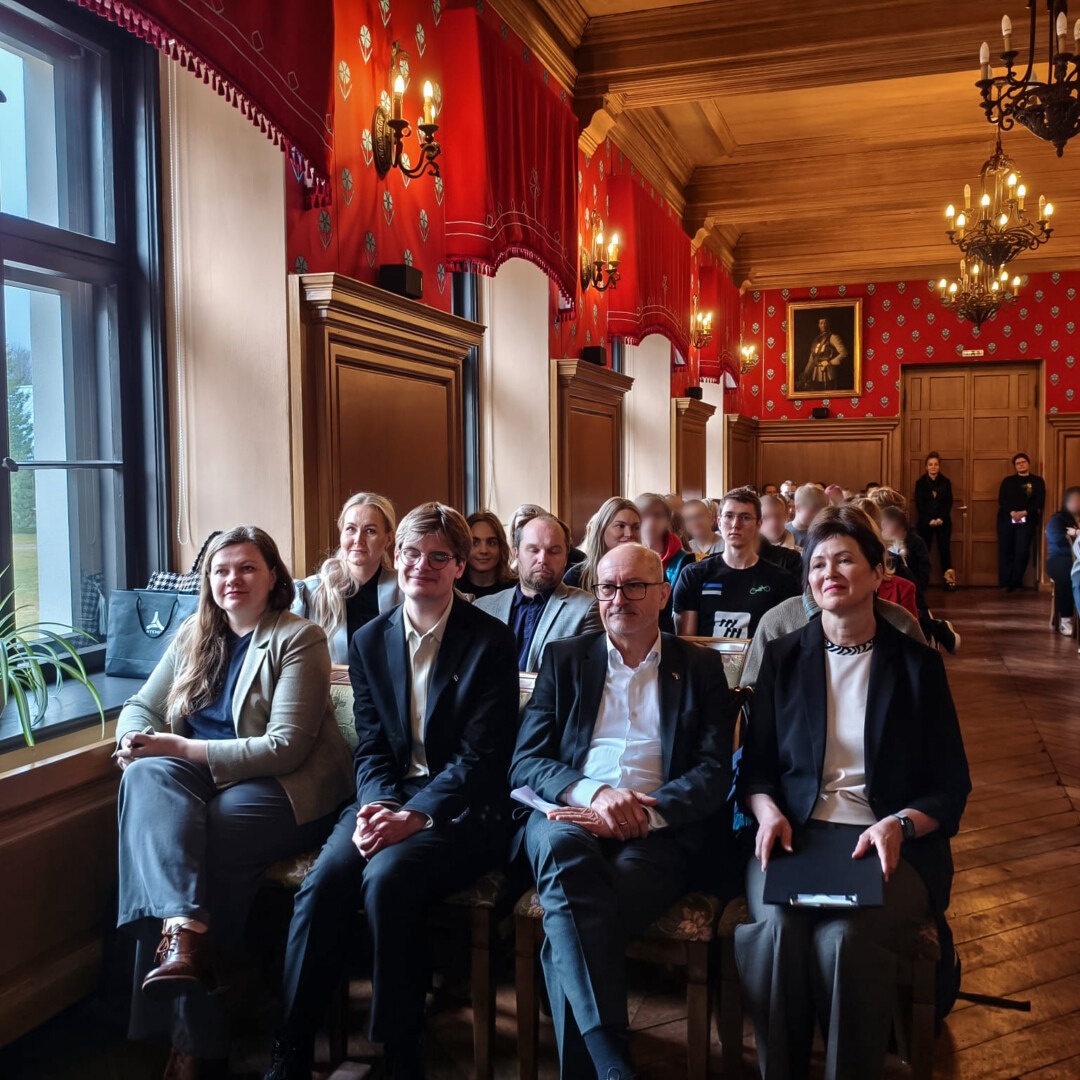
Young people from across Peipsiääre gathered to explore how language skills, creativity, and entrepreneurship connect to real careers. Events like this play a crucial role in bridging the gap between school and the professional world — especially in rural areas.
The importance of the day was underlined by the presence of the German Embassy Tallinn, highlighting not only international interest but also the relevance of German language and economic ties for Estonia’s future.
Equally important was the strong involvement of the private sector. Workshops were delivered by organizations such as the Estonian Woodhouse Association, Federation of Estonian Engineering Industry, and Junior Achievement Estonia, alongside many other companies. Many of these participants are also valued colleagues and partners of Nordic Render, making the collaboration especially meaningful — a network that actively contributes to both industry and education.
Their participation ensured that students were not only inspired, but also exposed to real industry perspectives and practical insights. At the local level, the initiative also reflects a strong commitment to community development, supported by the Peipsiääre Municipality.
Why Visuals Matter — A Workshop by Kert Klementi
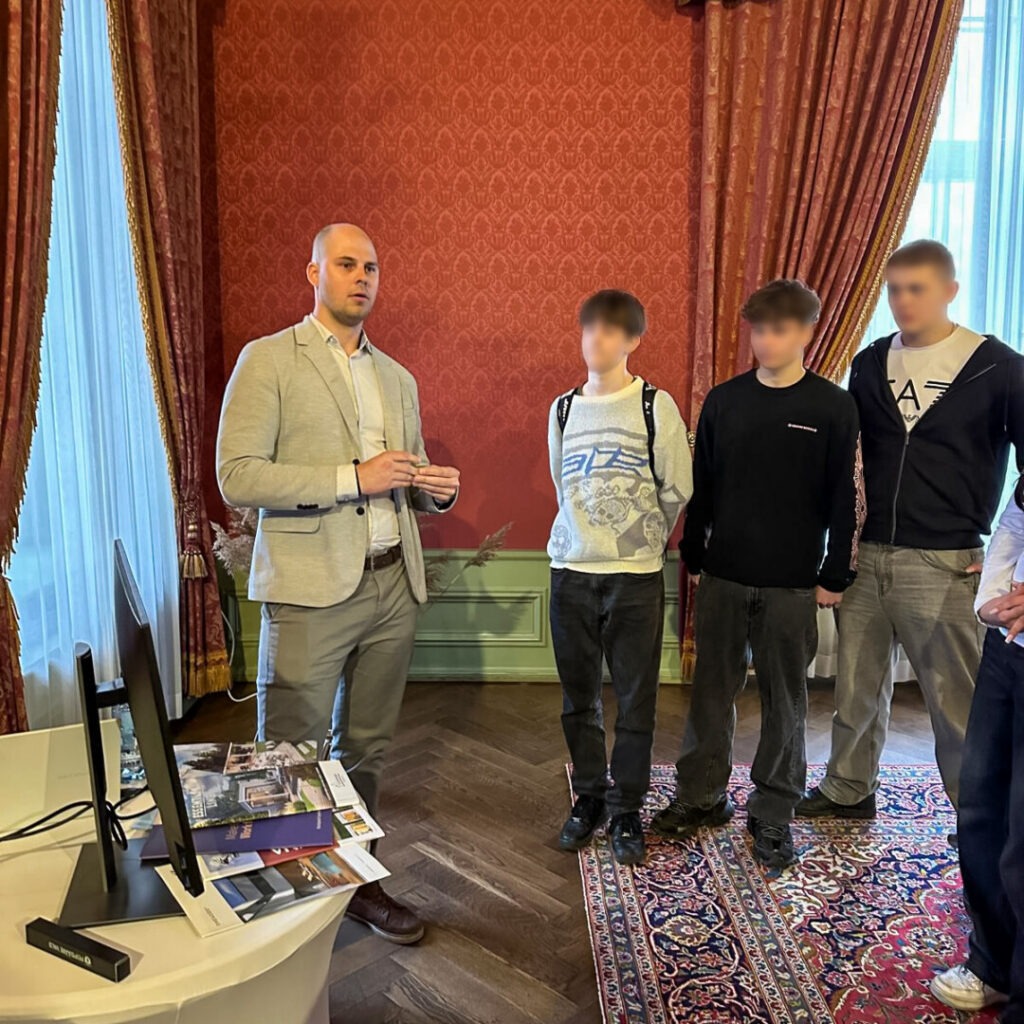
A key contribution from Nordic Render came through an interactive workshop led by the company’s CEO, Kert Klementi. In a highly engaging and accessible way, students were introduced to the power of visual communication — why images, 3D visuals, and animations are not just “nice to have,” but essential tools in today’s world.
The workshop explored:
- Why visuals influence decisions — people understand and trust what they can see
- How ideas become visible — from concept to realistic 3D environments
- Where visuals are used — architecture, real estate, product development, urban planning, and beyond
Students were particularly curious about how something abstract — like an idea or a plan — can be turned into a tangible visual that helps others understand and believe in it.
How to Become a Designer — Opening Career Pathways
Beyond inspiration, the session also gave practical insight into career opportunities. For students interested in this field, several pathways were highlighted:
- Architecture & Landscape Architecture — designing spaces and environments
- 3D Design & Visualization — creating photorealistic images and animations
- Computer Graphics & Software Engineering — developing the tools behind visuals
- Product Design & Industrial Design — shaping objects and user experiences
The key message was clear: If you are curious about how things look, how spaces feel, or how ideas can be presented visually — there is a place for you in this field.
Equally important are skills such as creativity, spatial thinking, attention to detail, and openness to technology. Software plays a role, but the foundation is always the ability to think visually and communicate ideas clearly.
A Shared Commitment to the Future
Nordic Render’s sponsorship and participation in the event reflect a broader belief: talent exists everywhere — but opportunity must be created. By contributing both through knowledge-sharing and tangible support — such as sponsoring quiz prizes — Nordic Render aimed to make the experience more engaging and rewarding for students.
Supporting initiatives like the Alatskivi Inspiration Day is a way to:
- bring real-world perspectives into education
- connect young people with professionals
- show concrete career paths
- and inspire confidence in their own potential
For many students, this may have been the first time they encountered careers in visual communication or spoke directly with professionals in the field.
Looking Ahead
The success of the day shows how powerful collaboration can be — schools, municipalities, international partners, and companies working together to create meaningful experiences for young people. For Nordic Render, it was both a privilege and a responsibility to contribute.
The Alatskivi Inspiration Day also received strong coverage in the local Peipsiääre Municipality newsletter, as well as in the German Baltic Future Foundation article , in the National Foundation of Civil Society article and other media, reflecting the wider relevance and impact of the event.
Q&A — Students Ask, Professionals Answer
Do I need to be good at drawing to become a 3D designer?
Drawing can help, especially in understanding composition and proportions, but it is not essential. What matters more is spatial thinking — the ability to understand how objects, light, and materials work in three dimensions. In professional visualization, the goal is not artistic expression alone, but the ability to represent real ideas accurately and clearly. Many professionals develop their visual skills over time through practice rather than formal drawing training.
What software do you use?
Professionals typically use tools such as Autodesk 3ds Max or Blender for modeling, along with rendering engines like V-Ray or Corona to create realistic images. In addition, tools like Photoshop are used to refine and finalize visuals.
However, it’s important to understand that software is just a tool. What truly matters is knowing how to communicate an idea visually — how to guide the viewer’s attention, create atmosphere, and present information clearly. Once you understand these principles, learning new software becomes much easier.
Is this more technical or creative?
It is both. Technical skills are needed to build accurate models and realistic visuals, while creative thinking is needed to present them in a way that people understand and connect with. In practice, these two aspects work together — the technical side ensures correctness, and the creative side ensures clarity and impact.
Where can I study this?
There are several paths. You can study architecture, design, multimedia, or related technical fields. At the same time, this is a field where your portfolio — what you can actually show — is very important. Many people also learn through online courses and practice. What matters most is developing the ability to turn ideas into clear visual outcomes.
Can this be a well-paid job?
Yes, especially as more industries rely on visual communication. Fields like real estate, product development, and marketing increasingly depend on high-quality visuals to present ideas and support decisions. Those who combine technical skills with a strong understanding of how visuals influence people can build successful careers, often working on international projects.
What was the most important thing to learn today?
That ideas become powerful when they are visible. A good idea alone is not always enough — people need to understand it and trust it. Visuals help make complex ideas clear and accessible, which is why they play an important role in how projects move forward.